Ghabrahat aur dil ghabrana: causes, what helps and when to worry
What causes ghabrahat and dil ghabrana (a racing, uneasy heart)? Anxiety, caffeine, low sugar, thyroid and heart rhythm problems explained, with emergency warning signs and practical steps.
Key points
- "Ghabrahat" and "dil ghabrana" describe a mix of unease, a racing or pounding heart, restlessness and fear. Anxiety is the most common cause, but not the only one.
- Physical causes include caffeine, dehydration, low blood sugar, anaemia, an overactive thyroid, heart rhythm problems and some medicines.
- Chest pain, fainting, severe breathlessness, or symptoms during exertion need urgent medical care. Don't assume it's "just ghabrahat".
- When a doctor has ruled out physical causes, slow breathing, grounding and CBT are very effective for anxiety-related ghabrahat.
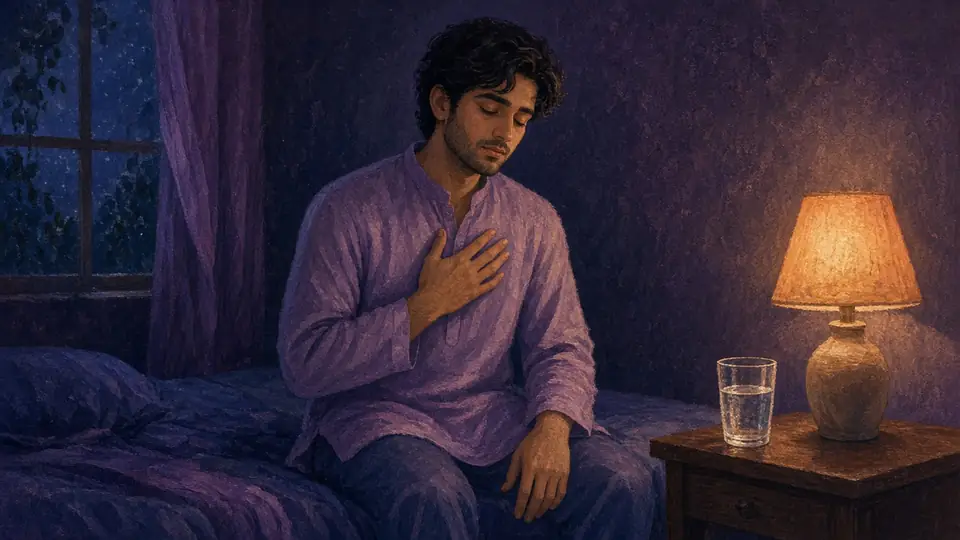
"Dil ghabra raha hai" is one of the most common things people in Pakistan say when they feel unwell, and it can mean many different things: a pounding heart, restlessness, a sinking feeling in the chest, nausea, fear, or a sense that something is wrong.
Most of the time, ghabrahat is linked to anxiety or stress. But sometimes it's the body's way of signalling a physical problem. This guide explains the common causes, the warning signs you should never ignore, and what helps.
What does ghabrahat feel like?
People describe it in different ways:
- Heart racing, pounding or "fluttering" (palpitations)
- Tightness or heaviness in the chest
- Restlessness and being unable to sit still
- Shortness of breath or feeling unable to take a full breath
- Sweating, trembling, cold hands
- Nausea or a churning stomach
- Dizziness or light-headedness
- A sense of fear or dread
Common causes
Anxiety and stress
This is the most common cause. When you're stressed, your body releases adrenaline, which speeds up your heart, tightens your muscles and quickens your breathing, the "fight or flight" response. In anxiety disorders, this response switches on even when there's no real danger. Read anxiety ka ilaj for treatment options.
Panic attacks
A sudden wave of intense fear, with a pounding heart, breathlessness, trembling and a feeling of losing control, that peaks within minutes. Panic attacks are frightening but not dangerous in themselves. See panic attack: what to do in the moment.
Caffeine, nicotine and energy drinks
Several cups of strong chai or coffee, energy drinks, or cold drinks with caffeine can trigger palpitations and restlessness, especially on an empty stomach.
Dehydration and heat
In Pakistan's hot summers, losing fluids through sweating, diarrhoea or vomiting can cause a fast heartbeat, weakness and dizziness. Fasting in hot weather can add to this.
Low blood sugar
In people with diabetes who take insulin or certain tablets, low sugar (below 70 mg/dL) causes sweating, shaking, hunger and a racing heart. Check your sugar if you can, and take some fast-acting sugar if it's low.
Anaemia (khoon ki kami)
Low haemoglobin, common in Pakistan, especially among women, makes the heart work harder and can cause palpitations, breathlessness and tiredness. A simple blood test (CBC) can check it.
Overactive thyroid
Too much thyroid hormone causes a fast heartbeat, anxiety, weight loss, sweating, tremor and feeling hot. A blood test (TSH) can detect it.
Heart rhythm problems
Conditions such as atrial fibrillation or supraventricular tachycardia cause a fast or irregular heartbeat. They need proper diagnosis with an ECG and treatment.
Medicines and substances
Some asthma inhalers, decongestants, thyroid medicine at too high a dose, and stopping alcohol or sleeping pills suddenly can all cause ghabrahat.
Acid reflux and indigestion
Heartburn and gas after a heavy meal can cause chest discomfort that feels like ghabrahat.
Emergency warning signs
Some symptoms may signal a heart attack or another emergency. Call 1122 or go to the nearest emergency department immediately if you have:
- Chest pain, pressure or tightness, especially if it spreads to the arm, jaw, neck or back, or comes with sweating or nausea
- Fainting or nearly fainting
- Severe shortness of breath
- Symptoms that start during physical exertion
- Confusion, slurred speech, or weakness of the face, arm or leg
Heart attacks in women, older people and people with diabetes can feel less "typical", for example breathlessness, tiredness or nausea without much chest pain. If in doubt, get checked. It's always better to be told it was anxiety than to miss a heart attack.
What to do during an episode
If you've already been checked by a doctor and know your ghabrahat is related to anxiety:
- Sit down somewhere safe.
- Slow your breathing: in through your nose for 4 seconds, out slowly through your mouth for 6 seconds. Repeat for a few minutes.
- Ground yourself: name 5 things you can see, 4 you can feel, 3 you can hear, 2 you can smell and 1 you can taste.
- Remind yourself: "This is anxiety. It's uncomfortable, but it will pass."
- Sip water, and avoid caffeine.
- If you have diabetes, check your sugar.
How a doctor investigates ghabrahat
A doctor will ask about your symptoms and check your pulse, blood pressure and heart. Depending on the situation, they may suggest:
- ECG (heart tracing)
- Blood tests: blood count (for anaemia), thyroid function, sugar, salts
- Holter monitor (a 24-hour or longer ECG) if palpitations come and go
- Echocardiogram (heart ultrasound) in some cases
Keep a note of when episodes happen, how long they last, what you were doing and what you'd eaten or drunk. It helps a lot.
Reducing ghabrahat long term
- Treat the cause: anaemia, thyroid problems, heart rhythm problems or anxiety
- Cut down caffeine gradually
- Stay hydrated, especially in summer
- Exercise regularly, which strengthens the heart and reduces anxiety
- Sleep well. See neend na ana.
- Learn anxiety skills through CBT or guided self-help
- Limit or avoid alcohol, smoking and other substances
A daily routine that lowers baseline ghabrahat
Ghabrahat often eases when the overall stress load on your body comes down. Small daily habits help:
- Move every day: a 20–30 minute brisk walk can reduce anxiety for many people.
- Cut down on caffeine: strong chai, coffee and energy drinks can trigger a racing heart and jitteriness. Try reducing gradually, especially after the afternoon.
- Regular meals: long gaps without food can cause shakiness and weakness that feel like anxiety.
- Sleep at regular times: poor sleep makes ghabrahat worse.
- Limit news and social media scrolling, especially at night.
- Practise slow breathing for 5 minutes twice a day, even when you feel fine, so it's easier to use when ghabrahat strikes.
- Talk to someone you trust: a friend, family member or counsellor.
- Avoid smoking, naswar and alcohol, which can worsen anxiety over time.
Keep a simple ghabrahat diary
For two weeks, note when ghabrahat happens, what you were doing, what you ate or drank, how you slept and what helped. Patterns often appear, and the diary is very useful if you see a doctor or psychologist.
See a doctor promptly if
- Call 1122 now if you have chest pain or pressure (especially spreading to the arm, jaw or back), fainting, severe breathlessness, or confusion, or if your symptoms started during exercise.
- You have a very fast heartbeat (over about 120 beats per minute at rest) that doesn't settle, or an irregular heartbeat.
- Episodes keep coming back, or you have weight loss, tremor, heat intolerance or heavy periods along with ghabrahat.
Frequently asked questions
Is dil ghabrana a heart problem?
Usually it's caused by anxiety, stress, caffeine or dehydration, but it can be a sign of a heart rhythm problem or, rarely, a heart attack. If it's new, severe, or comes with chest pain, fainting or breathlessness, get checked urgently.
Why does my heart race at night?
Lying quietly can make you more aware of your heartbeat. Anxiety, late caffeine, reflux and some medical conditions can cause night-time palpitations. If they're frequent, see a doctor for an ECG.
Can gas cause ghabrahat?
Indigestion and reflux can cause chest discomfort and unease. But don't assume chest pain is gas, especially if you're over 40, have diabetes, high BP or smoke. Get checked.
Which test is done for ghabrahat?
Common first tests are an ECG and blood tests for blood count, thyroid and sugar. A doctor may add a Holter monitor if palpitations come and go.
Can anaemia cause ghabrahat?
Yes. Low haemoglobin makes the heart pump faster to deliver oxygen, causing palpitations, breathlessness and tiredness.
Sources
- NHS. Heart palpitations.
- MedlinePlus. Heart palpitations.
- NHS. Heart attack: symptoms.
- NHS. Panic disorder.
- NHS. Overactive thyroid.
- World Health Organization. Anaemia fact sheet.
Sources were checked on 26 November 2026. Found an error? Tell us and we will correct it.
Medical disclaimer: This article is general information, not a diagnosis or treatment plan. Please talk to a qualified doctor about your own situation. Read our full disclaimer.
Thora sukoon, har hafte
One calm email a week with simple tips for better neend and less stress. Free, no spam.
We only use your email to send this newsletter and never share it. Unsubscribe anytime, every email has a one-click link. Privacy policy
Shukriya! You're on the list. Apna khayal rakhiye.
Something went wrong. Please check your email address and try again.