Panic attack: what to do in the moment, and how to stop them coming back
What a panic attack feels like, why it happens, a step-by-step plan for the moment it starts, how to help someone else, and the treatments (CBT and medicine) that prevent future attacks.

Key points
- A panic attack is a sudden surge of intense fear with physical symptoms that peaks within about 10 minutes. It feels terrifying but isn't dangerous in itself.
- In the moment: stay where you are, slow your breathing, ground yourself, and let it pass rather than fighting it.
- Don't breathe into a paper bag. This old advice isn't recommended.
- Repeated panic attacks (panic disorder) respond well to CBT, and sometimes medicine.
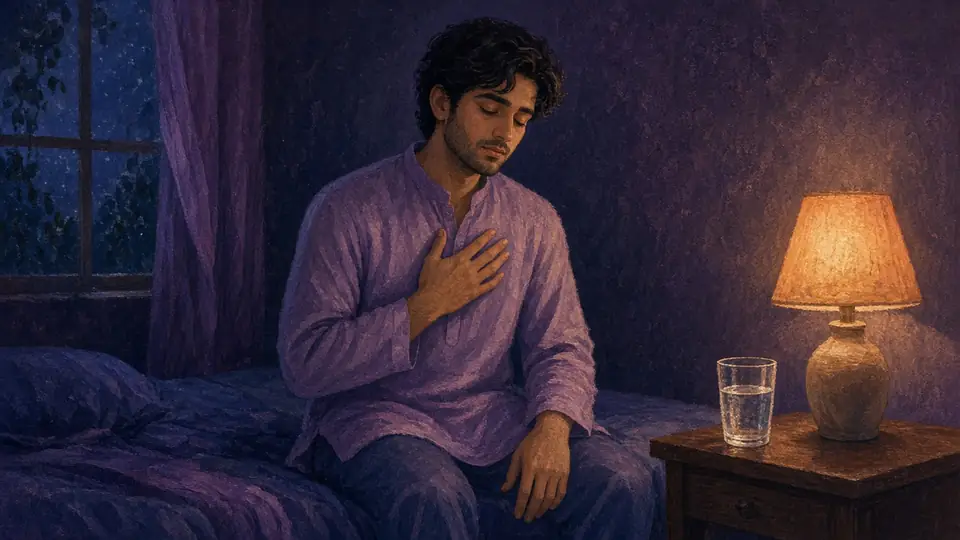
It often comes out of nowhere: your heart starts pounding, you can't catch your breath, your hands tingle, and you're suddenly sure you're having a heart attack, going mad, or about to die. Minutes later, it fades, leaving you shaken and exhausted.
That's a panic attack. Many people experience at least one in their lifetime. Many end up in an emergency department convinced something is seriously wrong, and leave with "sab reports normal hain" but no explanation.
This guide explains what panic attacks are, exactly what to do when one starts, and how to stop them taking over your life.
What is a panic attack?
A panic attack is a sudden rush of intense fear or discomfort that peaks within minutes and comes with physical symptoms such as:
- Pounding or racing heart
- Sweating, trembling or shaking
- Shortness of breath or a feeling of choking
- Chest pain or tightness
- Nausea or stomach upset
- Dizziness or feeling faint
- Chills or hot flushes
- Numbness or tingling, often in the hands, feet or lips
- Feeling unreal or detached from yourself
- Fear of losing control, "going mad" or dying
Most attacks last 5–20 minutes. The symptoms are caused by the body's alarm system (fight or flight) going off at the wrong time. Adrenaline floods your system, your heart speeds up, and you breathe faster, which in turn causes tingling and dizziness.
Is it a panic attack or a heart attack?
They can feel similar. If you've never had a panic attack before, or if this feels different, get checked urgently, especially if:
- You have chest pain spreading to the arm, jaw, neck or back
- You're over 40, or have diabetes, high blood pressure, high cholesterol, or smoke
- Symptoms started during physical exertion
- You faint
Call 1122 in these situations. Once a doctor has confirmed your attacks are panic, you can use the steps below with confidence.
What to do during a panic attack
1. Stay where you are, if it's safe
Running away teaches your brain that the place was dangerous. If you're driving, pull over safely.
2. Name it
Tell yourself: "This is a panic attack. It's frightening, but it can't hurt me. It will pass in a few minutes."
3. Slow your breathing
During panic, people breathe fast and shallow (hyperventilate), which causes dizziness and tingling. Try:
- Breathe in slowly through your nose for a count of 4
- Breathe out slowly through your mouth for a count of 6
- Keep going for a few minutes, focusing on the counting
Putting a hand on your stomach and feeling it rise and fall can help.
Don't breathe into a paper bag. This used to be common advice, but it isn't recommended, because it can lower oxygen levels and is risky if the symptoms have another cause.
4. Ground yourself in the present
Use your senses to pull your attention out of the fear:
- 5 things you can see
- 4 things you can touch
- 3 things you can hear
- 2 things you can smell
- 1 thing you can taste
Or hold something cold, press your feet into the floor, or describe the room around you in detail.
5. Let it peak and pass
Trying to fight or suppress panic often makes it stronger. Instead, imagine the feeling as a wave: it rises, peaks and falls. Let it wash over you.
6. Afterwards, be kind to yourself
Have some water, rest, and return to what you were doing when you feel able. That helps your brain learn the situation is safe.
How to help someone having a panic attack
- Stay calm and stay with them.
- Speak slowly and reassuringly: "You're safe. This will pass. I'm here."
- Encourage slow breathing, breathing slowly yourself so they can follow.
- Don't tell them to "calm down" or that it's "all in your head".
- Move them somewhere quieter if possible.
- If it's their first attack, or there's chest pain or fainting, call 1122.
Why do panic attacks keep happening?
After one attack, many people start fearing the next one. They watch their body closely for any sign of a racing heart, which makes them more anxious, which makes another attack more likely. They may start avoiding places where attacks happened: markets, buses, crowded functions, driving.
When attacks are frequent and come with this ongoing fear or avoidance, doctors call it panic disorder. It's common and very treatable.
Common triggers include stress, poor sleep, caffeine, energy drinks, skipping meals, alcohol, and withdrawal from sleeping pills or other substances.
Treatments that prevent panic attacks
CBT (cognitive behavioural therapy)
CBT is the first-choice psychological treatment for panic disorder. It helps you:
- Understand the cycle of panic
- Change catastrophic thoughts ("My heart is racing, so I'm having a heart attack")
- Gradually and safely re-experience the physical sensations so they stop being frightening
- Return to places you've been avoiding
Many people improve significantly within around 8–12 sessions.
Medicine
For frequent or severe panic attacks, a doctor may recommend an SSRI-type antidepressant, which reduces how often attacks occur. It takes a few weeks to work. Benzodiazepines ("nerve tablets") may stop an attack quickly, but they aren't recommended for long-term treatment of panic disorder, because of the risk of dependence. See neend ki goliyan: khatray.
Lifestyle
- Cut down on caffeine and avoid energy drinks
- Exercise regularly
- Protect your sleep
- Eat regular meals
- Avoid alcohol and drugs
Read more in anxiety ka ilaj and ghabrahat aur dil ghabrana.
Getting help in Pakistan
Talk to your doctor, a psychiatrist or a clinical psychologist.
See a doctor promptly if
- It's your first episode, or symptoms are different from your usual attacks. Get checked to rule out heart and other physical problems.
- You have chest pain spreading to your arm or jaw, fainting, or symptoms during exercise. Call 1122.
- Panic attacks are frequent, or you're avoiding places or activities because of them.
Frequently asked questions
Can a panic attack kill you?
No. A panic attack feels terrifying, but it isn't dangerous in itself. However, if it's your first episode, or you have chest pain, get checked to rule out a heart problem.
How long does a panic attack last?
Most peak within about 10 minutes and are over within 20–30 minutes, though you may feel tired or shaky afterwards.
Why do I get panic attacks at night?
Night-time panic attacks can wake people from sleep. They're linked to the same causes as daytime attacks and respond to the same treatments.
Can panic attacks be cured?
Panic disorder is very treatable. Many people become free of attacks, or have them so rarely that they no longer affect their life, after CBT and/or medicine.
Is it okay to go to the emergency department for a panic attack?
Yes, especially the first time or if you're not sure. Doctors would much rather check you than have you miss a heart problem.
Sources
- NHS. Panic disorder.
- National Institute of Mental Health (NIH). Panic disorder: when fear overwhelms.
- NICE. Generalised anxiety disorder and panic disorder in adults: management (CG113).
- MedlinePlus. Panic disorder.
- NHS. Breathing exercises for stress.
Sources were checked on 26 November 2026. Found an error? Tell us and we will correct it.
Medical disclaimer: This article is general information, not a diagnosis or treatment plan. Please talk to a qualified doctor about your own situation. Read our full disclaimer.
Thora sukoon, har hafte
One calm email a week with simple tips for better neend and less stress. Free, no spam.
We only use your email to send this newsletter and never share it. Unsubscribe anytime, every email has a one-click link. Privacy policy
Shukriya! You're on the list. Apna khayal rakhiye.
Something went wrong. Please check your email address and try again.