Neend na ana: 12 common causes of sleeplessness and what helps
Can't sleep at night? The 12 most common reasons for neend na ana, from stress, phones and chai to pain, sleep apnoea and depression, with practical fixes and when to see a doctor.
Key points
- Occasional bad nights are normal. Trouble sleeping on 3 or more nights a week for 3 months is called chronic insomnia and deserves proper help.
- The most common causes are stress and worry, irregular sleep times, screens and late chai or coffee, but medical problems like pain, sleep apnoea, thyroid problems and depression can also be responsible.
- The best long-term treatment for insomnia is CBT for insomnia (CBT-I), not sleeping pills.
- Simple changes, like a fixed wake-up time, no caffeine after mid-afternoon and getting out of bed when you can't sleep, help many people within weeks.
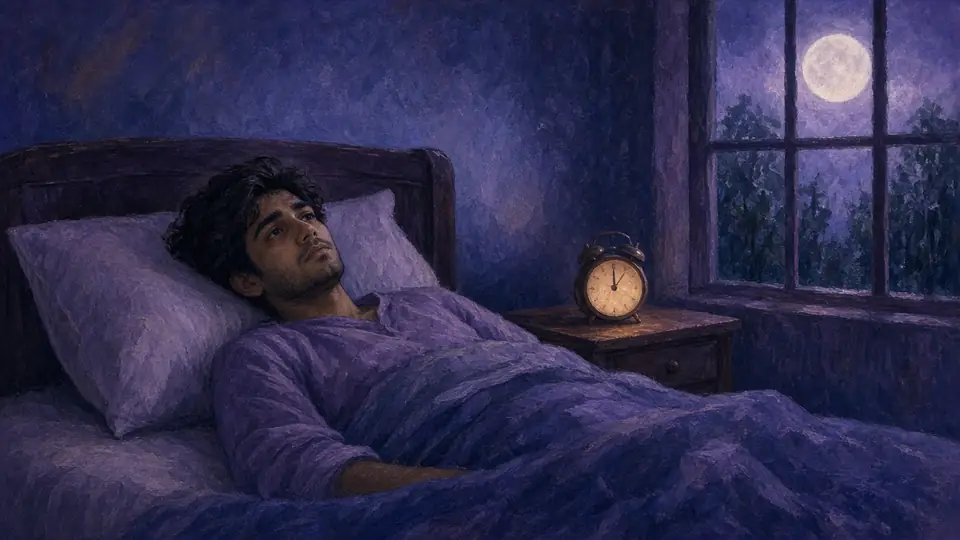
Raat ke 2 baj gaye, aankhen band, lekin dimagh chal raha hai. If that sounds familiar, you're far from alone. Sleep problems are among the most common health complaints worldwide, and in Pakistan, long working hours, money worries, late dinners, load-shedding, heat and late-night phone use all play a part.
The good news is that most sleep problems have a cause you can find and fix. This guide walks through the 12 most common reasons people can't sleep, and what actually helps.
What counts as a sleep problem?
Most adults need 7–9 hours of sleep a night, though needs vary. Insomnia means having trouble:
- Falling asleep (lying awake for more than about 30 minutes)
- Staying asleep (waking up often during the night)
- Waking too early and being unable to get back to sleep
and feeling tired, irritable or unable to concentrate during the day as a result.
A few bad nights before an exam or after bad news is normal. When it happens at least 3 nights a week for 3 months or longer, doctors call it chronic insomnia.
12 common causes of neend na ana
1. Stress and worry
This is the most common trigger. Problems at work, money, exams, family conflict or illness keep the mind racing. Your body stays in "alert mode", with higher levels of stress hormones that make it hard to switch off. Our guide to overthinking has practical techniques for a busy mind at night.
2. Irregular sleep timings
Sleeping at 1 am on weekdays and 4 am on weekends, or napping late in the afternoon, confuses your body clock. Shift work and late-night routines make it worse.
3. Phones, TV and screens in bed
Scrolling keeps your brain engaged and can push back your sleep time without you noticing. Notifications and messages wake you up. Bright screens late at night may also delay your body clock.
4. Chai, coffee and energy drinks
Caffeine can stay in your system for many hours. A cup of strong chai at 9 pm, or an energy drink in the evening, can easily keep you awake. Cold drinks and some painkillers also contain caffeine.
5. Heavy or late dinners
Eating a large, oily or spicy meal shortly before bed can cause indigestion and acid reflux, which make it hard to sleep comfortably.
6. Smoking and nicotine
Nicotine is a stimulant. Smokers often sleep more lightly and may wake with cravings.
7. An uncomfortable bedroom
Heat, humidity, mosquitoes, noise, light from the street and power cuts all affect sleep. A cool, dark, quiet room helps.
8. Anxiety and depression
Insomnia and mental health problems are closely linked. Anxiety often makes it hard to fall asleep, while depression commonly causes early-morning waking. Poor sleep can also make anxiety and depression worse. See our guides to anxiety and depression in men.
9. Pain and medical conditions
Back pain, joint pain, headaches, acid reflux, asthma, an overactive thyroid, heart failure and frequent night-time urination (from diabetes or prostate problems) can all disrupt sleep.
10. Sleep apnoea
In obstructive sleep apnoea, the airway repeatedly closes during sleep, briefly stopping breathing. Signs include loud snoring, gasping or choking at night, waking unrefreshed and feeling very sleepy in the day. It's more common in people who are overweight and is linked to high blood pressure and heart disease. It's very treatable, so mention it to a doctor.
11. Restless legs
An uncomfortable urge to move your legs in the evening or at night, which is relieved by movement, may be restless legs syndrome. It's sometimes linked to low iron.
12. Medicines and other substances
Some medicines can affect sleep, including certain antidepressants, steroids, decongestants and some BP medicines. Alcohol may make you drowsy at first but disturbs sleep later in the night. Never stop a prescribed medicine on your own; ask your doctor whether timing or an alternative could help.
What actually helps
Fix your wake-up time
Choose a wake-up time and stick to it every day, including weekends, even after a bad night. This is one of the most powerful ways to reset your body clock. Your bedtime will naturally follow.
Use your bed only for sleep
If you can't sleep after about 20 minutes, get up, go to another room and do something calm and boring in dim light, such as reading or light stretching. Return to bed only when you feel sleepy. This teaches your brain that bed means sleep, not worrying.
Cut caffeine after mid-afternoon
Try having your last chai or coffee by about 2–3 pm, and avoid energy drinks.
Create a wind-down routine
Spend 30–60 minutes before bed winding down: put your phone away or on silent, dim the lights, make wudu, pray, read, have a warm shower, or try slow breathing.
Get daylight in the morning
Morning light helps set your body clock. Step outside or sit near a window soon after waking.
Be careful with naps
If you must nap, keep it short (20–30 minutes) and before mid-afternoon.
Move during the day
Regular physical activity improves sleep quality. Avoid intense exercise right before bed if it wakes you up.
Write down your worries
If your mind races at night, set aside 15 minutes in the early evening to write down your worries and a possible next step for each. This is called "worry time", and it can stop the same thoughts circling at midnight.
For a structured plan, follow our 2-week sleep reset for insomnia.
What about sleeping pills?
Sleeping pills are easy to buy in many Pakistani pharmacies, but they carry real risks, including dependence, morning drowsiness, falls and memory problems, and they don't fix the cause. Guidelines recommend them only for short periods in specific situations, prescribed by a doctor. Read neend ki goliyan: khatray aur mehfooz istemal before taking them.
See a doctor promptly if
- Poor sleep is affecting your work, mood, driving or relationships for more than a few weeks.
- You snore loudly, stop breathing or gasp in your sleep, or feel very sleepy during the day.
- You feel hopeless, low or anxious most days, or have thoughts of harming yourself. Call 1122 or go to the nearest hospital emergency department.
Frequently asked questions
Why can't I sleep even when I'm tired?
Being physically tired isn't the same as being ready to sleep. Stress hormones, a racing mind, caffeine or an irregular body clock can keep you awake even when you're exhausted.
How many hours of sleep do I need?
Most adults need 7–9 hours a night. Teenagers need more, while some older adults need slightly less. How you feel during the day matters more than an exact number.
Is it bad to use my phone in bed?
It often makes sleep worse, because it keeps your brain active, pushes back your bedtime and disturbs you with notifications. Try leaving it outside the bedroom or on silent and out of reach.
Can warm milk help me sleep?
A warm, non-caffeinated drink can be a relaxing part of a bedtime routine, but there's little evidence that milk itself causes sleep. The routine matters more than the drink.
When should I see a doctor about sleep?
If poor sleep has lasted several weeks and affects your daytime life, or if you snore loudly, gasp at night or feel very sleepy during the day, see a doctor.
Sources
- NHS. Insomnia.
- MedlinePlus (US National Library of Medicine). Insomnia.
- National Heart, Lung, and Blood Institute (NIH). Insomnia: causes and risk factors.
- NHS. Sleep apnoea.
- Qaseem A, et al. Management of chronic insomnia disorder in adults: a clinical practice guideline from the American College of Physicians. Annals of Internal Medicine, 2016.
- Sleep Foundation. Caffeine and sleep.
Sources were checked on 26 November 2026. Found an error? Tell us and we will correct it.
Medical disclaimer: This article is general information, not a diagnosis or treatment plan. Please talk to a qualified doctor about your own situation. Read our full disclaimer.
Thora sukoon, har hafte
One calm email a week with simple tips for better neend and less stress. Free, no spam.
We only use your email to send this newsletter and never share it. Unsubscribe anytime, every email has a one-click link. Privacy policy
Shukriya! You're on the list. Apna khayal rakhiye.
Something went wrong. Please check your email address and try again.