Phone addiction and sleep: how late-night scrolling steals your neend (and a 7-day fix)
How phone use at night affects sleep: blue light and melatonin, mental arousal from social media and news, "revenge bedtime procrastination", signs of problematic phone use, effects on teenagers, and a practical 7-day plan to cut night-time screen use.
Key points
- Late-night phone use is linked with going to bed later, taking longer to fall asleep, shorter sleep and daytime tiredness.
- The biggest problem isn't only blue light. It's mental stimulation (social media, videos, news, games, messages) and lost sleep time.
- Simple fixes: stop screens 30–60 minutes before bed, charge your phone outside the bedroom, use an alarm clock, and switch off notifications.
- If you can't cut down despite trying, or phone use is harming your work, studies or relationships, talk to a professional.
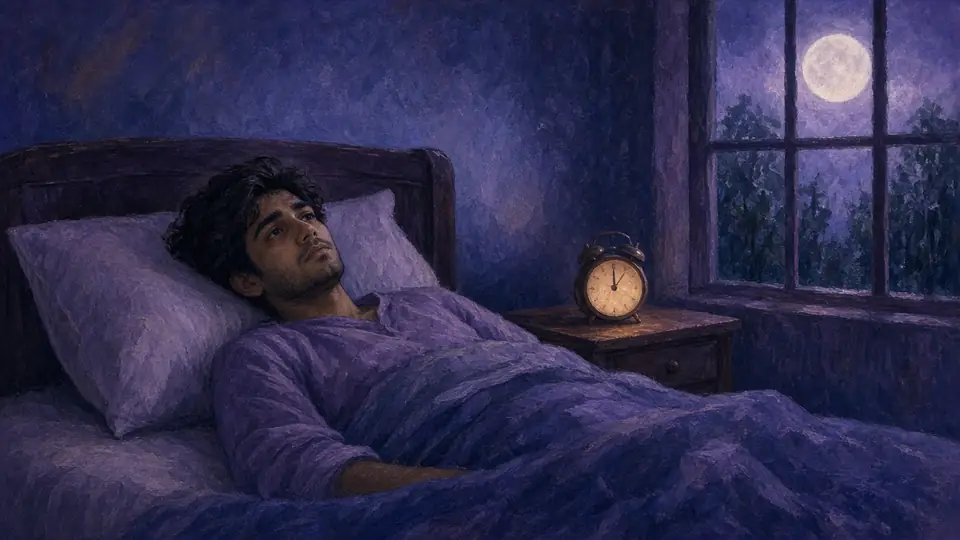
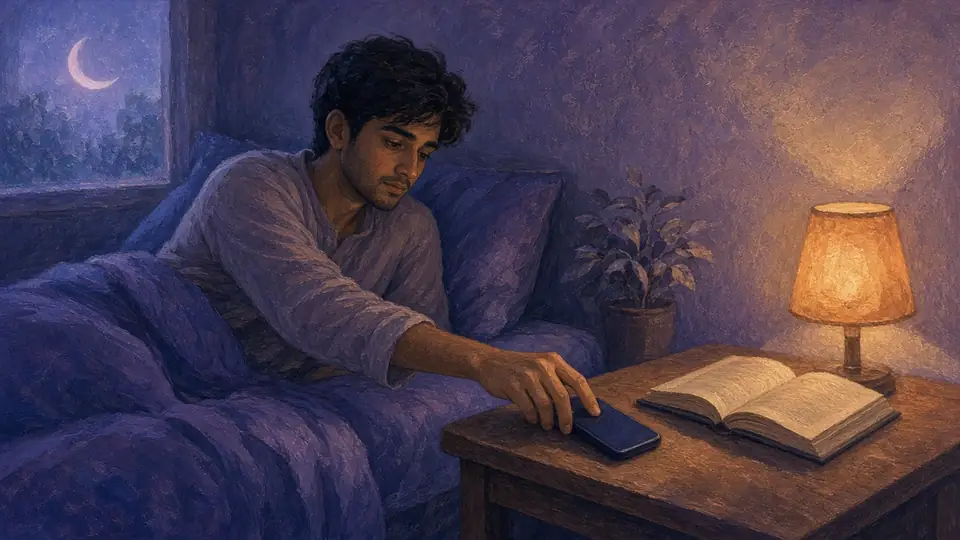
"Bas 5 minute aur." You pick up your phone in bed to check one message, and suddenly it's 2 am. You've watched 40 short videos, scrolled through news you didn't need, and your alarm is in 5 hours.
This is one of the most common sleep problems today, for teenagers, students, office workers and parents. This guide explains why phones disturb sleep and gives a realistic plan to take your nights back.
How phones affect sleep
1. Lost time
The simplest effect: every minute spent scrolling is a minute not sleeping. Many people go to bed at a reasonable time but fall asleep much later because of their phone.
2. Mental stimulation
Social media, videos, games, WhatsApp groups and news keep the brain alert and emotionally engaged. An argument in a group chat, a worrying news story or an exciting video triggers the stress response, the opposite of what you need for sleep.
3. Blue light and melatonin
Screens emit blue-enriched light. Light in the evening can delay the release of melatonin, the hormone that helps signal night-time. Research suggests the effect of a typical phone is smaller than once thought, but bright screens close to your face for long periods can still push your body clock later.
4. Notifications at night
Message tones, vibrations and lit-up screens can wake you or pull you out of deep sleep.
5. Revenge bedtime procrastination
After a long day of work, studies or family duties, many people stay up on their phone to get "me time", even though they know they'll be tired. This pattern has a name: revenge bedtime procrastination.
What research shows
- A systematic review found that bedtime use of media devices in children and teenagers was associated with inadequate sleep, poor sleep quality and daytime sleepiness.
- A study comparing reading on a light-emitting e-reader with a printed book before bed found the screen delayed melatonin, made it take longer to fall asleep, and reduced morning alertness.
- Studies of adults also link problematic smartphone use with poorer sleep quality, anxiety and depression, although the direction of cause isn't always clear.
Signs your phone use is a problem
- You lose track of time on your phone, especially at night.
- You often sleep later than planned because of it.
- You check your phone first thing on waking and when you wake at night.
- You feel anxious or irritable without it.
- You've tried to cut down but couldn't.
- It's affecting your work, studies, relationships or prayers.
"Phone addiction" isn't an official diagnosis for most people, but problematic smartphone use is real and worth addressing.
Teenagers and children
Teenagers are especially vulnerable because:
- Their body clock naturally shifts later in adolescence.
- School starts early, so late nights mean short sleep.
- Social pressure to stay online is strong.
Tips for parents:
- Keep phones and tablets out of bedrooms at night, and set a household charging spot.
- Agree on a screen curfew together, rather than imposing it suddenly.
- Set an example: parents scrolling in bed makes rules hard to enforce.
- Watch for signs of cyberbullying, anxiety or low mood.
A 7-day plan to fix phone-related sleep problems
Day 1: Measure
Check your phone's screen time report. How many hours? Which apps? What time do you usually stop?
Day 2: Notifications off
Turn off all non-essential notifications. Mute busy WhatsApp groups. Turn on Do Not Disturb / Bedtime mode from bedtime to wake time, allowing calls from close family for emergencies.
Day 3: Move the charger
Charge your phone outside the bedroom, or at least across the room. Use a cheap alarm clock instead of your phone.
Day 4: Screen curfew
Stop using screens 30–60 minutes before bed. Replace with something calming: reading a book, light stretching, a warm shower, prayer or dhikr, or talking with family.
Day 5: Remove the hooks
Move social media and video apps off your home screen. Log out of apps you check compulsively. Consider app time limits.
Day 6: Fix the morning
Don't check your phone for the first 15–30 minutes after waking. Get some daylight instead. Morning light helps set your body clock so you feel sleepy earlier at night.
Day 7: Review
Compare your screen time and sleep with Day 1. Keep what worked; adjust what didn't.
If you can't sleep without your phone
Many people use their phone to distract themselves from worries or loneliness at night. If that's you:
- Try writing your worries down before bed.
- Use slow breathing exercises.
- Listen to calm audio with the screen off and a sleep timer.
- If worries and overthinking are constant, read overthinking kaise band kare and anxiety symptoms in Urdu.
Night mode and blue-light glasses: do they help?
- Night mode / warm screen settings reduce blue light, but they don't stop the mental stimulation. They're better than nothing, not a full solution.
- Blue-light-blocking glasses have mixed evidence. Putting the phone away is more effective.
- Lowering brightness and holding the phone further away help a little.
Phones, sleep and the family
In many Pakistani homes, family members share rooms, and one person's phone light or video sound can keep others awake. A few household agreements help:
- Headphones at night, and screen brightness at the lowest setting.
- A shared "phones down" time, for example after Isha or after dinner.
- No phones at the dinner table, which also improves family conversation.
- Talk, don't shout: explain to teenagers how sleep affects exam results, sports and mood, rather than simply confiscating phones.
See a doctor promptly if
- You've had poor sleep for more than 3 months, or feel very sleepy during the day despite fixing your phone habits.
- You snore loudly or stop breathing in your sleep.
- Phone use or gaming is linked with low mood, anxiety, isolation or thoughts of self-harm. Talk to a doctor, and in an emergency call 1122.
Frequently asked questions
Does using my phone before bed really affect sleep?
Yes. Phone use before bed is linked with going to sleep later, taking longer to fall asleep and poorer sleep quality, mainly through mental stimulation and lost sleep time, and partly through light exposure.
Raat ko mobile chalane se neend kyun nahi aati?
Mobile dimagh ko jagaye rakhta hai: videos, social media aur news se stress aur excitement barhti hai, roshni neend ke hormone melatonin ko late karti hai, aur waqt ka pata nahi chalta.
How long before bed should I stop using my phone?
Aim for at least 30–60 minutes before bed.
Is night mode enough?
Night mode helps a little with light, but it doesn't stop the stimulation from content. Putting the phone away is more effective.
Can phone addiction cause anxiety or depression?
Problematic phone use is associated with anxiety, depression and poor sleep. They may affect each other. If you're struggling, speak to a doctor or psychologist.
Sources
- Carter B, et al. Association between portable screen-based media device access or use and sleep outcomes: a systematic review and meta-analysis. JAMA Pediatrics, 2016.
- Chang AM, et al. Evening use of light-emitting eReaders negatively affects sleep, circadian timing, and next-morning alertness. PNAS, 2015.
- Hale L, Guan S. Screen time and sleep among school-aged children and adolescents: a systematic literature review. Sleep Medicine Reviews, 2015.
- Sleep Foundation. How electronics affect sleep.
- NHS. How to fall asleep faster and sleep better.
Sources were checked on 26 November 2026. Found an error? Tell us and we will correct it.
Medical disclaimer: This article is general information, not a diagnosis or treatment plan. Please talk to a qualified doctor about your own situation. Read our full disclaimer.
Thora sukoon, har hafte
One calm email a week with simple tips for better neend and less stress. Free, no spam.
We only use your email to send this newsletter and never share it. Unsubscribe anytime, every email has a one-click link. Privacy policy
Shukriya! You're on the list. Apna khayal rakhiye.
Something went wrong. Please check your email address and try again.