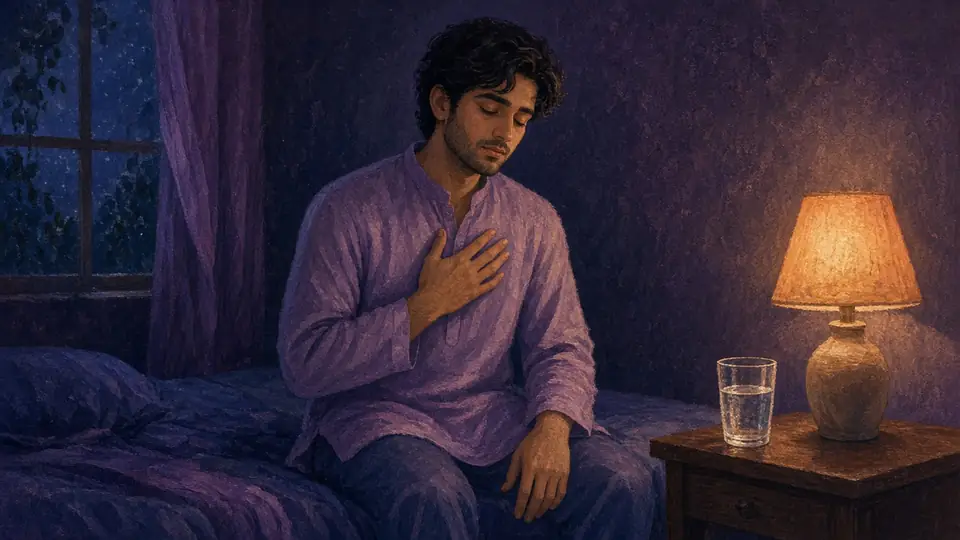
Anxiety symptoms in Urdu: anxiety ki alamaat, pehchan aur kab madad lein
Anxiety symptoms explained in English, Roman Urdu and Urdu: physical signs (dil ki dharkan, saans, pasina), mental and behavioural signs, how anxiety differs from normal worry, types of anxiety disorders, a self-check, and when to get help in Pakistan.

Key points
- Anxiety causes physical symptoms (fast heartbeat, breathlessness, sweating, shaking, stomach upset, headaches) as well as mental symptoms (constant worry, restlessness, poor concentration, irritability, sleep problems).
- Some worry is normal. Anxiety becomes a disorder when it is excessive, hard to control, lasts for months and affects daily life.
- Many people in Pakistan first go to doctors for dil ki ghabrahat, gas or weakness before anxiety is recognised. It's important to rule out physical causes too.
- Anxiety disorders are common and treatable with talking therapy (such as CBT), self-help and, when needed, medicine prescribed by a doctor.
"Dil ghabrata hai, haath kaanpte hain, aur har waqt lagta hai kuch bura hone wala hai." Many people in Pakistan live with symptoms like these for years without realising they're signs of anxiety. Others visit doctor after doctor for heart checks, stomach medicines and "weakness" tonics.
This guide explains anxiety symptoms in simple English, Roman Urdu and Urdu, so you can recognise them in yourself or someone you love, and know when to get help.
What is anxiety?
Anxiety is the body's natural response to threat, the "fight or flight" response. It releases stress hormones such as adrenaline, which speed up the heart and breathing and make you alert. In short bursts, before an exam or interview, this is normal and even helpful.
An anxiety disorder is when this alarm system is switched on too often, too strongly, or without real danger, and it starts to interfere with life.
Physical symptoms of anxiety (jismani alamaat)
- Fast or pounding heartbeat (dil ki dharkan tez hona)
- Breathlessness or feeling you can't get enough air (saans phoolna)
- Chest tightness
- Sweating, hot flushes or chills
- Trembling or shaking (haath paon kaanpna)
- Dizziness or light-headedness (chakkar aana)
- Dry mouth
- Nausea, stomach upset, "gas", loose motions (pait kharab rehna)
- Headaches, muscle tension, neck and shoulder pain
- Tingling or numbness in hands, feet or lips
- Tiredness and feeling weak
- Needing to pass urine often
Mental and emotional symptoms (zehni alamaat)
- Constant worry that's hard to control (har waqt fikr)
- Feeling on edge, restless or "wound up" (bechaini)
- Fear that something bad will happen
- Difficulty concentrating, mind going blank
- Irritability (chirchirapan)
- Overthinking, replaying conversations, "what if" thoughts. See overthinking kaise band kare.
- Feeling detached or unreal
Behavioural signs
- Avoiding situations, places or people that trigger anxiety
- Seeking reassurance repeatedly
- Difficulty sleeping: trouble falling asleep, or waking at night with worries. See neend na ana.
- Checking things repeatedly
- Using smoking, naswar, alcohol or pills to calm down
Anxiety symptoms in Urdu: اینگزائٹی کی علامات
جسمانی علامات:
- دل کی دھڑکن تیز ہونا یا دل گھبرانا
- سانس پھولنا یا سینے میں گھٹن
- پسینہ آنا، ہاتھ پاؤں کانپنا
- چکر آنا، سر میں درد
- پیٹ خراب رہنا، متلی یا گیس
- ہاتھوں یا ہونٹوں میں سن ہونا یا جھنجھناہٹ
- تھکاوٹ اور کمزوری
ذہنی علامات:
- ہر وقت فکر اور پریشانی جس پر قابو نہ ہو
- بے چینی اور بے قراری
- یہ ڈر کہ کچھ برا ہونے والا ہے
- توجہ مرکوز کرنے میں مشکل
- چڑچڑاپن
- نیند نہ آنا یا بار بار آنکھ کھلنا
اگر یہ علامات کئی ہفتوں یا مہینوں تک رہیں اور روزمرہ زندگی متاثر ہو، تو ڈاکٹر یا ماہرِ نفسیات سے ضرور رجوع کریں۔ اینگزائٹی قابلِ علاج ہے۔
Normal worry vs an anxiety disorder
| Normal worry | Anxiety disorder |
|---|---|
| Linked to a real problem | Often out of proportion, or about many things |
| Comes and goes | Present most days for weeks or months |
| You can set it aside | Hard to control or switch off |
| Doesn't stop daily life | Affects work, studies, sleep, relationships |
| Physical symptoms are mild and brief | Physical symptoms are frequent and distressing |
Common types of anxiety disorders
- Generalised anxiety disorder (GAD): excessive worry about many things, most days, for at least 6 months
- Panic disorder: repeated, sudden panic attacks with intense physical symptoms, and fear of having more. See panic attack: what to do.
- Social anxiety: intense fear of being judged or embarrassed in social situations
- Phobias: intense fear of specific things, such as heights, injections or flying
- Health anxiety: persistent fear of having a serious illness
- Obsessive-compulsive disorder (OCD) and post-traumatic stress disorder (PTSD) are related conditions with their own patterns
Physical causes to rule out
Some medical problems cause anxiety-like symptoms, so a check-up is sensible, especially if symptoms are new:
- Overactive thyroid
- Heart rhythm problems
- Low blood sugar (especially in people with diabetes)
- Anaemia
- Asthma or lung problems
- Too much caffeine, energy drinks, or some medicines and supplements
- Withdrawal from alcohol, sleeping pills or drugs
See ghabrahat ka ilaj: dil ghabrana for heart-related warning signs.
A quick self-check
Over the last 2 weeks, how often have you been bothered by:
- Feeling nervous, anxious or on edge?
- Not being able to stop or control worrying?
These two questions come from a widely used screening tool (GAD-2). If you answered "more than half the days" or "nearly every day" to either, it's worth talking to a doctor or psychologist. This isn't a diagnosis, only a prompt to get checked.
Why anxiety often goes unrecognised in Pakistan
- Stigma: fear of being called "pagal" or weak
- Physical focus: symptoms are described as dil, pait or kamzori problems
- Men are expected to "be strong" and not talk about feelings
- Limited access to psychologists, especially outside big cities
Anxiety is a health condition, not a weakness of character or faith.
What helps
- Talking therapy, especially cognitive behavioural therapy (CBT), is one of the most effective treatments.
- Self-help: regular exercise, slow breathing, limiting caffeine, regular sleep, and reducing avoidance step by step.
- Medicine: for moderate to severe anxiety, a doctor may prescribe medicines such as certain antidepressants. These need to be prescribed and monitored, and are not habit-forming in the way sleeping pills can be.
- Avoid self-medicating with sleeping pills or tranquillisers bought from a pharmacy. They can cause dependence. See neend ki goliyan: khatray.
For full treatment options, read anxiety ka ilaj.
Where to get help in Pakistan
- Your family doctor (GP) can assess you and refer you.
- Psychiatrists (doctors) and clinical psychologists at hospitals and clinics
- In an emergency, call 1122 or go to the nearest hospital emergency department.
See a doctor promptly if
- You have chest pain, fainting, or severe breathlessness. Get urgent medical help first; don't assume it's anxiety.
- Anxiety is stopping you from working, studying, sleeping or leaving the house.
- You're using sleeping pills, alcohol or drugs to cope.
- You have thoughts of harming yourself. Call 1122 or go to the nearest hospital emergency department.
Frequently asked questions
Anxiety ki alamaat kya hain?
Dil ki dharkan tez hona, saans phoolna, pasina, haath kaanpna, chakkar, pait kharab rehna, har waqt fikr, bechaini, chirchirapan aur neend na aana anxiety ki aam alamaat hain.
Can anxiety cause physical symptoms?
Yes. Anxiety commonly causes a fast heartbeat, breathlessness, chest tightness, sweating, shaking, dizziness, stomach upset and headaches.
Is anxiety a sign of weak faith?
No. Anxiety is a common health condition that can affect anyone. Faith and prayer can be a source of comfort, and they can go alongside proper treatment.
How do I know if I need treatment for anxiety?
If anxiety is present most days for several weeks, is hard to control, and affects your work, studies, sleep or relationships, talk to a doctor or psychologist.
Can anxiety be cured?
Many people recover fully or learn to manage anxiety well with therapy, self-help and, when needed, medicine.
Sources
- World Health Organization. Anxiety disorders fact sheet.
- National Institute of Mental Health (NIH). Anxiety disorders.
- NHS. Generalised anxiety disorder in adults.
- Kroenke K, et al. Anxiety disorders in primary care: prevalence, impairment, comorbidity, and detection (GAD-2). Annals of Internal Medicine, 2007.
- NICE. Generalised anxiety disorder and panic disorder in adults: management (CG113).
- Rozan. Rozan Counseling Helpline.
Sources were checked on 26 November 2026. Found an error? Tell us and we will correct it.
Medical disclaimer: This article is general information, not a diagnosis or treatment plan. Please talk to a qualified doctor about your own situation. Read our full disclaimer.
Thora sukoon, har hafte
One calm email a week with simple tips for better neend and less stress. Free, no spam.
We only use your email to send this newsletter and never share it. Unsubscribe anytime, every email has a one-click link. Privacy policy
Shukriya! You're on the list. Apna khayal rakhiye.
Something went wrong. Please check your email address and try again.