Breathing exercises in 5 minutes for anxiety, stress and sleep (step by step)
Five simple breathing exercises you can do in 5 minutes for anxiety, stress, panic and sleep: slow 4-6 breathing, belly breathing, box breathing, 4-7-8 breathing and the physiological sigh. How they work, what research shows, mistakes to avoid and when breathing isn't enough.
Key points
- Slow breathing, especially with a longer out-breath, activates the body's calming system and can reduce feelings of stress and anxiety within minutes.
- The simplest method: breathe in for 4 seconds, out for 6 seconds, for 5 minutes.
- Practise daily when calm, so the technique works better when you're anxious or panicking.
- Breathing exercises are a helpful tool, not a cure. Ongoing anxiety, panic or insomnia may need therapy or medical treatment.
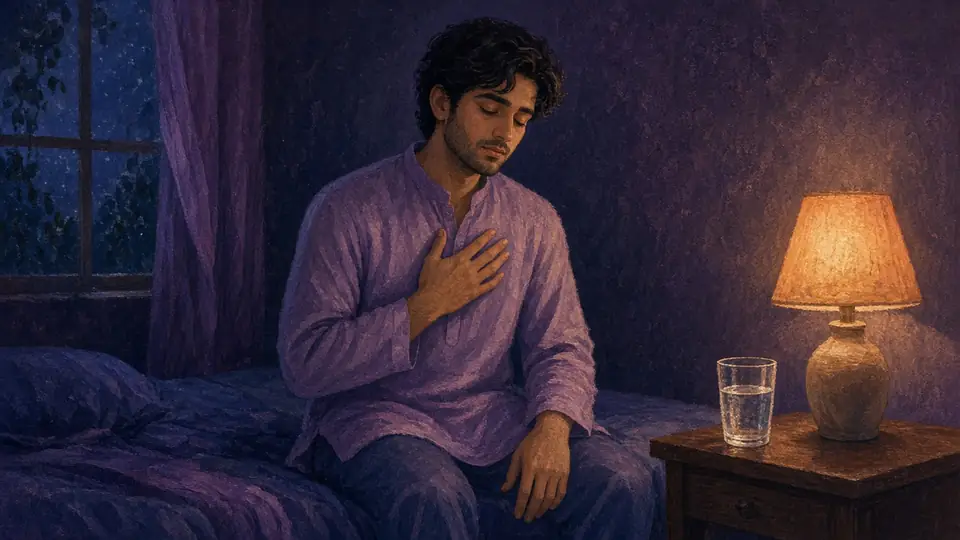
When you're anxious, your breathing changes. It becomes fast and shallow, high in the chest. This sends a "danger" signal to your body, which makes anxiety worse. Breathing exercises reverse this loop. They're free, take a few minutes, and you can do them anywhere: at your desk, in traffic, or in bed.
This guide gives five simple techniques with step-by-step instructions, explains how they work, and tells you how to make them part of daily life.
How breathing affects anxiety
Your nervous system has two main modes:
- Sympathetic ("fight or flight"): heart speeds up, breathing quickens, muscles tense
- Parasympathetic ("rest and digest"): heart slows, breathing deepens, body relaxes
Breathing is one of the few parts of this system you can control directly. Slow breathing, especially with a long out-breath, stimulates the vagus nerve and shifts the body towards calm. Heart rate tends to slow slightly with each out-breath.
When people breathe fast during anxiety or panic, they may over-breathe (hyperventilate). This lowers carbon dioxide levels in the blood and can cause dizziness, tingling in the hands and lips, and a feeling of not getting enough air, even though you're breathing plenty. Slowing your breathing helps fix this.
What research shows
- A systematic review of studies on slow breathing found it was associated with increased relaxation and reduced anxiety, anger and confusion, along with changes in heart rate variability and brain activity linked with calm.
- A randomised study comparing daily 5-minute breathing practices with mindfulness meditation found that breathwork, particularly exhale-focused "cyclic sighing", improved mood and reduced anxiety more than meditation over one month.
- Breathing retraining is often included in cognitive behavioural therapy (CBT) for anxiety and panic.
Studies are generally small, so breathing exercises are best seen as one helpful tool among others.
Before you start
- Sit or lie comfortably. Loosen tight clothing.
- Breathe through your nose if you can.
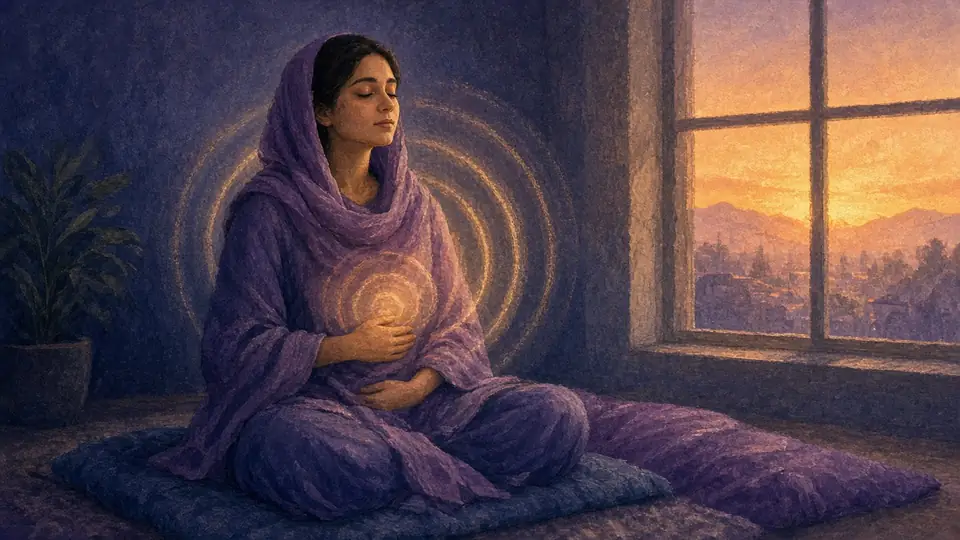
- Place one hand on your chest and one on your belly.
- Don't force big breaths. Gentle and slow is the aim.
- If you feel dizzy, stop and breathe normally.
1. Slow 4–6 breathing (the easiest)
- Breathe in through your nose for 4 seconds.
- Breathe out slowly through your mouth or nose for 6 seconds, as if gently blowing on hot chai.
- Repeat for 5 minutes, which is about 30 breaths.
Best for: everyday stress, before a meeting or exam, calming down after an argument.
2. Belly (diaphragmatic) breathing
- Place one hand on your chest, one on your belly.
- Breathe in slowly through your nose so your belly rises and your chest stays mostly still.
- Breathe out slowly and feel your belly fall.
- Continue for 5 minutes.
Best for: people who breathe shallowly in the chest, tension in the shoulders, learning to relax.
3. Box breathing (4-4-4-4)
- Breathe in for 4 seconds.
- Hold for 4 seconds.
- Breathe out for 4 seconds.
- Hold for 4 seconds.
- Repeat for 3–5 minutes.
If holding feels uncomfortable, shorten holds to 2 seconds.
Best for: focus under pressure, racing thoughts. Picture tracing the sides of a square.
4. 4-7-8 breathing
- Breathe in through your nose for 4 seconds.
- Hold for 7 seconds.
- Breathe out through your mouth, making a soft "whoosh", for 8 seconds.
- Repeat 4 cycles to start. Increase gradually.
Best for: winding down at night. See neend na ana.
Avoid long breath holds if you're pregnant or have heart or lung conditions, unless your doctor agrees.
5. The physiological sigh (cyclic sighing)
- Take a normal breath in through your nose.
- Take a second, short "top-up" breath in to fully fill the lungs.
- Breathe out slowly and fully through your mouth.
- Repeat for 1–5 minutes.
Best for: quick relief during a stressful moment.
Using breathing during a panic attack
During a panic attack it can feel impossible to breathe slowly. Try this:
- Remind yourself: "This is a panic attack. It will pass. I'm not in danger."
- Breathe out first, slowly, as if through a straw.
- Then breathe in gently through the nose for 3–4 seconds and out for 5–6.
- Focus on the out-breath.
- Ground yourself: name 5 things you can see, 4 you can touch, 3 you can hear.
Breathing into a paper bag is no longer generally recommended, as it can be unsafe if the cause isn't panic.
Read the full guide: panic attack: what to do in the moment.
Making it a daily habit
Breathing techniques work best when you've practised them while calm. Try:
- Morning: 5 minutes of slow 4–6 breathing after Fajr or waking
- During work: a 1-minute physiological sigh between tasks
- Before sleep: 4-7-8 or belly breathing in bed
- Triggers: in traffic, before difficult conversations, before exams
Link it to an existing habit, like after wudu, after tea, or when you sit in the car.
Common mistakes
- Breathing too deeply or too fast, which can cause dizziness
- Forcing breath holds that feel uncomfortable
- Only trying it during a crisis, without practising first
- Expecting instant, total relief. Breathing reduces anxiety; it may not remove it completely.
- Breathing through the mouth all the time when nasal breathing is possible
Breathing and prayer
Many people notice that the slow, rhythmic pace of recitation, dhikr or prayer naturally slows breathing. If this is meaningful for you, you can combine slow breathing with dhikr: for example, a quiet phrase on the in-breath and another on the out-breath.
When breathing exercises aren't enough
Breathing is a helpful tool, but it doesn't treat the causes of ongoing anxiety. Seek help if:
- Anxiety is present most days for weeks
- Panic attacks keep happening
- You're avoiding places or situations
- Sleep problems persist
Treatments like CBT and, when needed, medicine prescribed by a doctor work well. Read anxiety ka ilaj and anxiety symptoms in Urdu.
A 5-minute routine you can follow
If you're not sure which technique to use, try this sequence:
| Minute | What to do |
|---|---|
| 0–1 | Sit comfortably. Notice your breathing without changing it. Drop your shoulders. |
| 1–2 | Three physiological sighs, then normal breathing. |
| 2–4 | Slow 4–6 breathing with a hand on your belly. |
| 4–5 | Breathe normally. Notice how your body feels. Name one thing you'll do next. |
Many phones have free timer or breathing apps. If you use one, turn off notifications so it doesn't pull you into other apps.
Tracking your progress
Before and after each practice, rate your stress from 0 (completely calm) to 10 (extremely tense). After a week or two, you'll usually see a pattern: many people drop 2–3 points after a 5-minute session. Seeing this in numbers helps you trust the technique when anxiety is high.
You can also notice changes over time: falling asleep faster, fewer tense headaches, or recovering more quickly after a stressful call.
See a doctor promptly if
- You have chest pain, severe breathlessness, blue lips or fainting. Seek urgent help; don't assume it's anxiety.
- Breathing exercises make you feel more breathless or dizzy every time, or you have asthma, COPD or heart disease.
- Anxiety or panic attacks are frequent or stopping you from living normally.
Frequently asked questions
Which breathing exercise is best for anxiety?
Slow breathing with a longer out-breath, such as 4 seconds in and 6 seconds out, is simple and effective for most people. Exhale-focused cyclic sighing also showed good results in research.
How long does it take for breathing exercises to work?
Many people feel calmer within 1–5 minutes. Daily practice over weeks tends to give bigger benefits.
Saans ki exercise anxiety mein kaise madad karti hai?
Aahista saans, khaas kar lambi bahar ki saans, jism ke "calm" system ko activate karti hai. Is se dil ki dharkan dheemi hoti hai aur ghabrahat kam hoti hai.
Can breathing exercises help with sleep?
Yes. Slow breathing before bed, such as 4-7-8 or belly breathing, can help you relax and fall asleep.
Are breathing exercises safe for everyone?
Gentle slow breathing is safe for most people. If you have asthma, COPD, heart disease or are pregnant, avoid long breath holds and check with your doctor.
Sources
- Zaccaro A, et al. How breath-control can change your life: a systematic review on psycho-physiological correlates of slow breathing. Frontiers in Human Neuroscience, 2018.
- Balban MY, et al. Brief structured respiration practices enhance mood and reduce physiological arousal. Cell Reports Medicine, 2023.
- NHS. Breathing exercises for stress.
- Harvard Health Publishing. Relaxation techniques: breath control helps quell errant stress response.
- NHS. Panic disorder.
Sources were checked on 26 November 2026. Found an error? Tell us and we will correct it.
Medical disclaimer: This article is general information, not a diagnosis or treatment plan. Please talk to a qualified doctor about your own situation. Read our full disclaimer.
Thora sukoon, har hafte
One calm email a week with simple tips for better neend and less stress. Free, no spam.
We only use your email to send this newsletter and never share it. Unsubscribe anytime, every email has a one-click link. Privacy policy
Shukriya! You're on the list. Apna khayal rakhiye.
Something went wrong. Please check your email address and try again.